Turn Ideas into Polished Business Decks
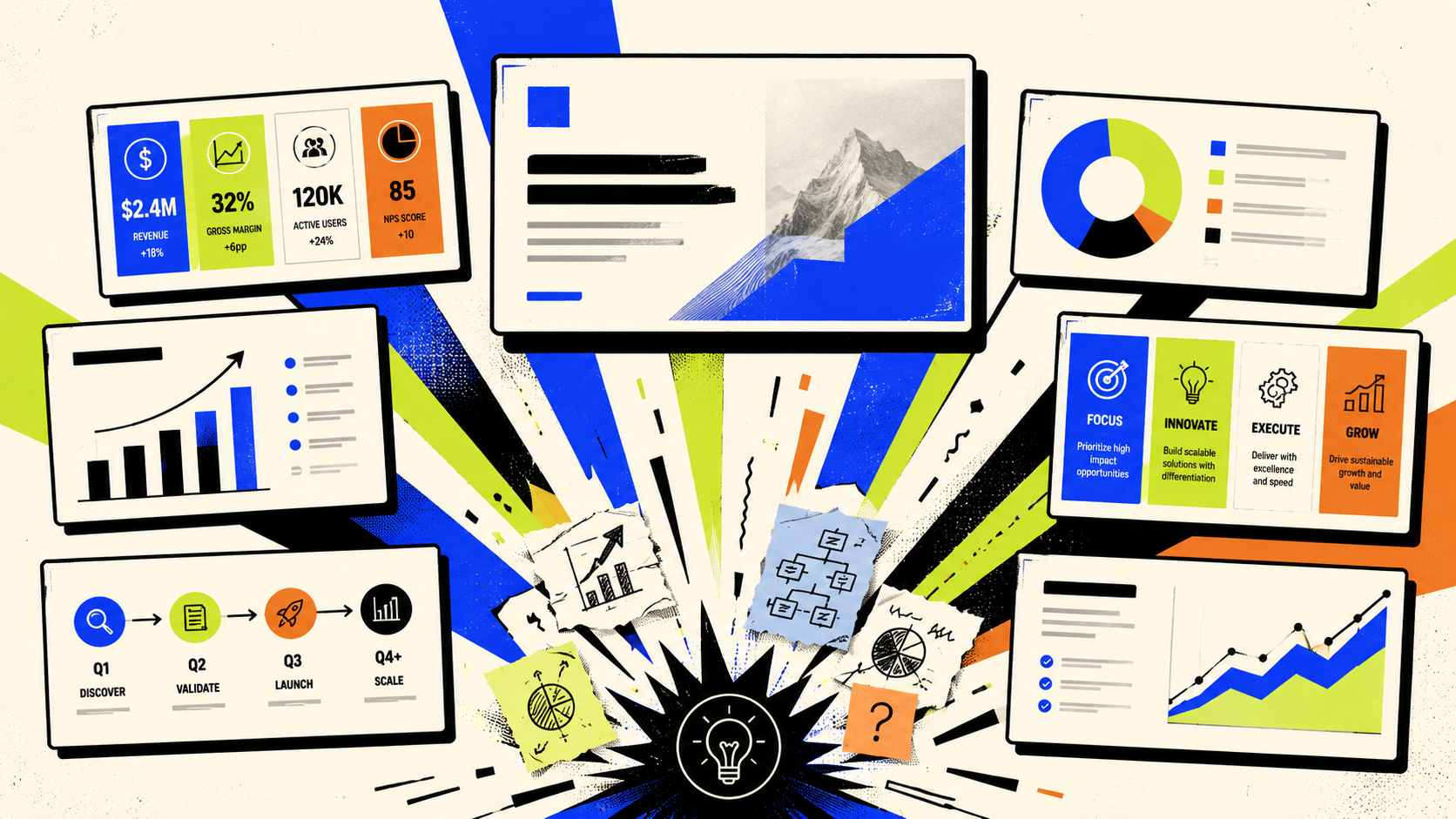
A business deck often begins before the slides exist. It starts as a loose idea, a possible proposal, a new strategy, a product direction, or a rough plan that still needs shape.
The idea may feel clear in someone’s head, but that does not mean it is ready to present. A business deck has to do more than describe an idea. It needs to explain why the idea matters, who it is for, what problem it solves, what evidence supports it, and what should happen next.
That is where many teams lose time. They are not only choosing layouts or rewriting slide text. They are trying to turn an unfinished thought into a structured business argument.
AI can make this process faster. Instead of starting from a blank presentation, you can start with a rough idea and use AI to turn it into a polished business deck structure in minutes.
Start Creating
Why business ideas are hard to turn into decks
Many business ideas begin in a rough form. A founder may have a new product concept. A sales team may have a client proposal direction. A marketer may have a campaign idea. A product manager may have a strategy recommendation. The idea is there, but the structure is missing.
This is the difficult part of creating a business deck: the first version is not just about slides. It is about deciding what the idea is really trying to prove.
A vague idea like “we should enter a new market” cannot become a strong deck by simply adding design. It needs context, audience, evidence, and a clear point of view. The deck has to explain why the market matters, what opportunity exists, what risks need attention, and what action the audience should support.
Without that structure, a deck can quickly become a collection of disconnected slides. One slide explains the problem. Another shows a chart. Another lists features. Another describes next steps. Each part may be useful, but the overall presentation still feels unfinished because the argument has not been shaped.
A polished business deck is not just a better-looking version of a rough idea. It is the result of turning that idea into a clear narrative.
What a polished business deck needs
A polished business deck should help the audience understand the idea quickly and decide whether it is worth supporting. That means the deck needs to be built around logic, not decoration.
The visuals matter, but they should support the message. A beautiful deck with unclear thinking will still feel weak. A strong deck usually has three things working together: a clear audience and purpose, a storyline that explains the business logic, and evidence that supports the recommendation.
1. A clear audience and purpose
Before an idea becomes a deck, the audience needs to be clear.
A pitch deck for investors should not sound like an internal strategy memo. A client proposal should not feel like a product roadmap. A leadership presentation should not bury the decision under too many operational details. The same idea can become very different decks depending on who needs to read it and what they need to decide.
For example, if the idea is to launch a new AI training service for enterprise teams, the deck should change depending on the audience. For executives, the focus may be business value, market timing, and strategic fit. For clients, the focus may be pain points, implementation, and outcomes. For an internal team, the focus may be timeline, resources, and responsibilities.
A polished business deck starts by answering a simple question: what does this audience need to believe, understand, or approve by the end of the presentation?
2. A storyline that explains the business logic
A business deck should not feel like a pile of slides. It should feel like a guided path.
The audience needs to move from the current situation to the proposed action. That usually means the deck has to establish a problem, explain why the problem matters now, introduce the idea, show why the idea is credible, and end with a clear recommendation.
This storyline is what turns a rough idea into a business argument.
For example, a deck about a new service should not begin by listing features. It should first explain the business problem the service solves. Then it can define the target audience, introduce the solution, show the value, and explain the plan to launch or sell it.
When the storyline is clear, the deck becomes easier to follow. The audience does not need to guess why each slide exists. Every section has a job.
3. Evidence that supports the recommendation
Business decks need more than confident language. They need proof.
Evidence can come from market research, customer feedback, internal data, competitive analysis, revenue assumptions, product usage, sales conversations, or operational constraints. The evidence does not need to make the deck heavy, but it should make the idea feel grounded.
A polished deck uses evidence selectively. It does not show every data point available. It chooses the evidence that helps the audience evaluate the idea and understand the recommendation.
This is especially important when the deck is meant to persuade. If the idea asks for budget, approval, a client decision, or strategic alignment, the audience needs to see why the recommendation is reasonable.
How AI helps shape rough ideas into business deck structure
AI presentation tools are useful because they can help organize an idea before the first slide is manually designed.
Instead of writing every section from scratch, you can describe the idea, audience, goal, and available context. AI can then turn that input into a structured first draft with a clearer storyline, slide sequence, section titles, and suggested content.
For example, a team may start with a rough idea like this:
- We want to launch an AI training service for enterprise teams
- The service helps employees use AI tools more effectively
- The target audience is business teams that want practical AI adoption
- The deck should explain the problem, solution, value, go-to-market plan, and next steps
- The tone should be professional and suitable for leadership or client discussion
On its own, this is not yet a business deck. It is a useful direction, but it still needs structure.
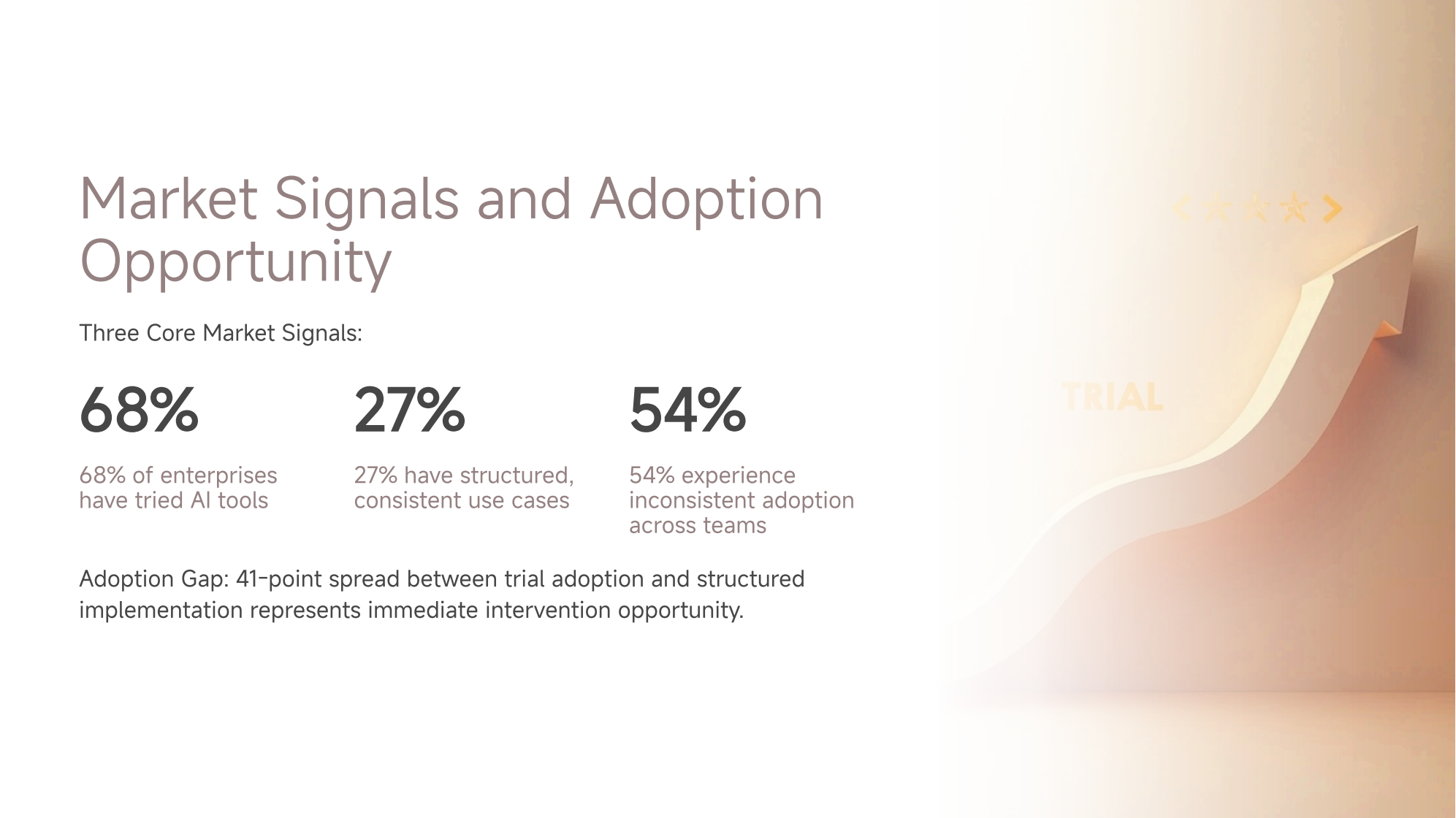
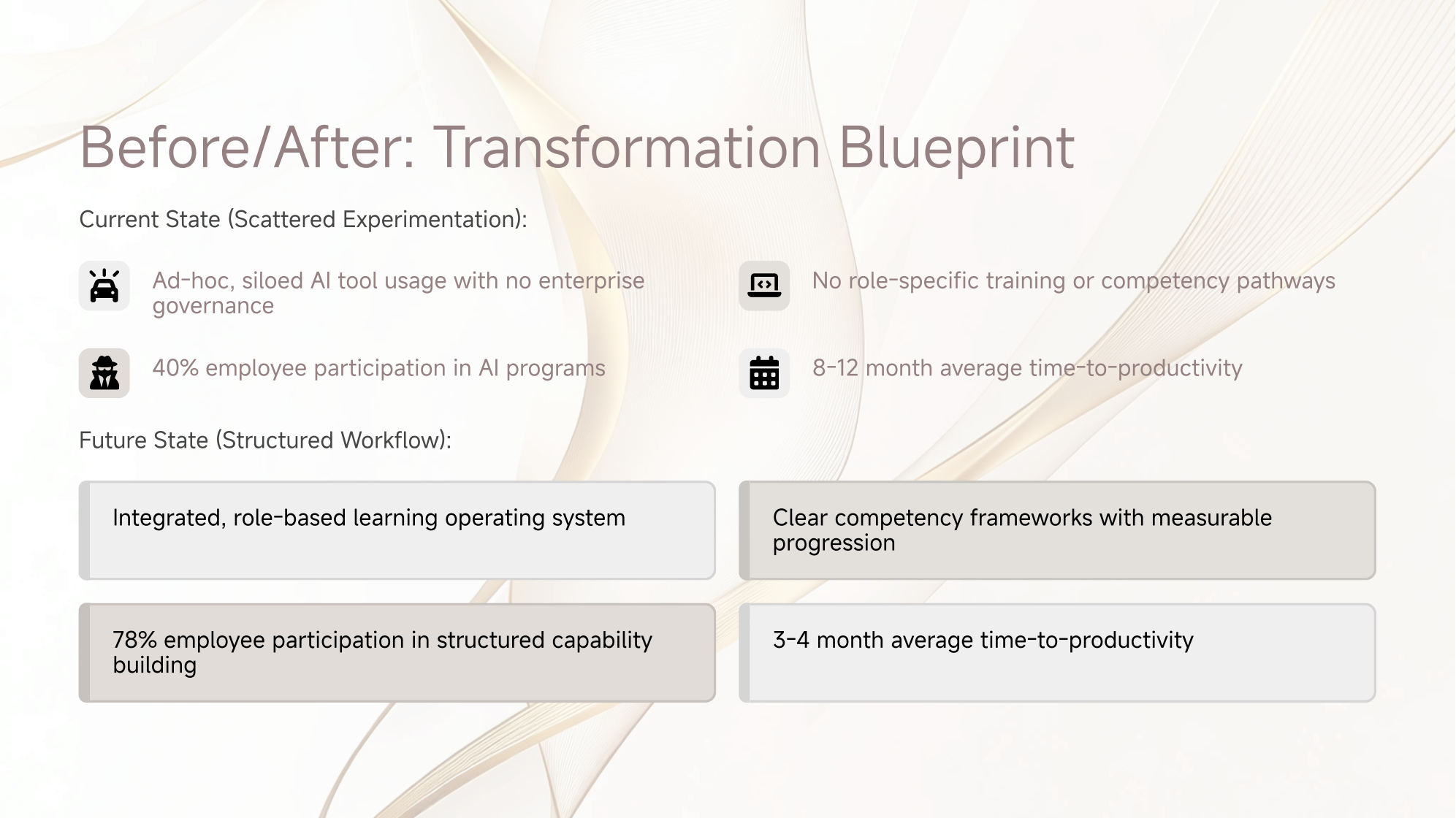
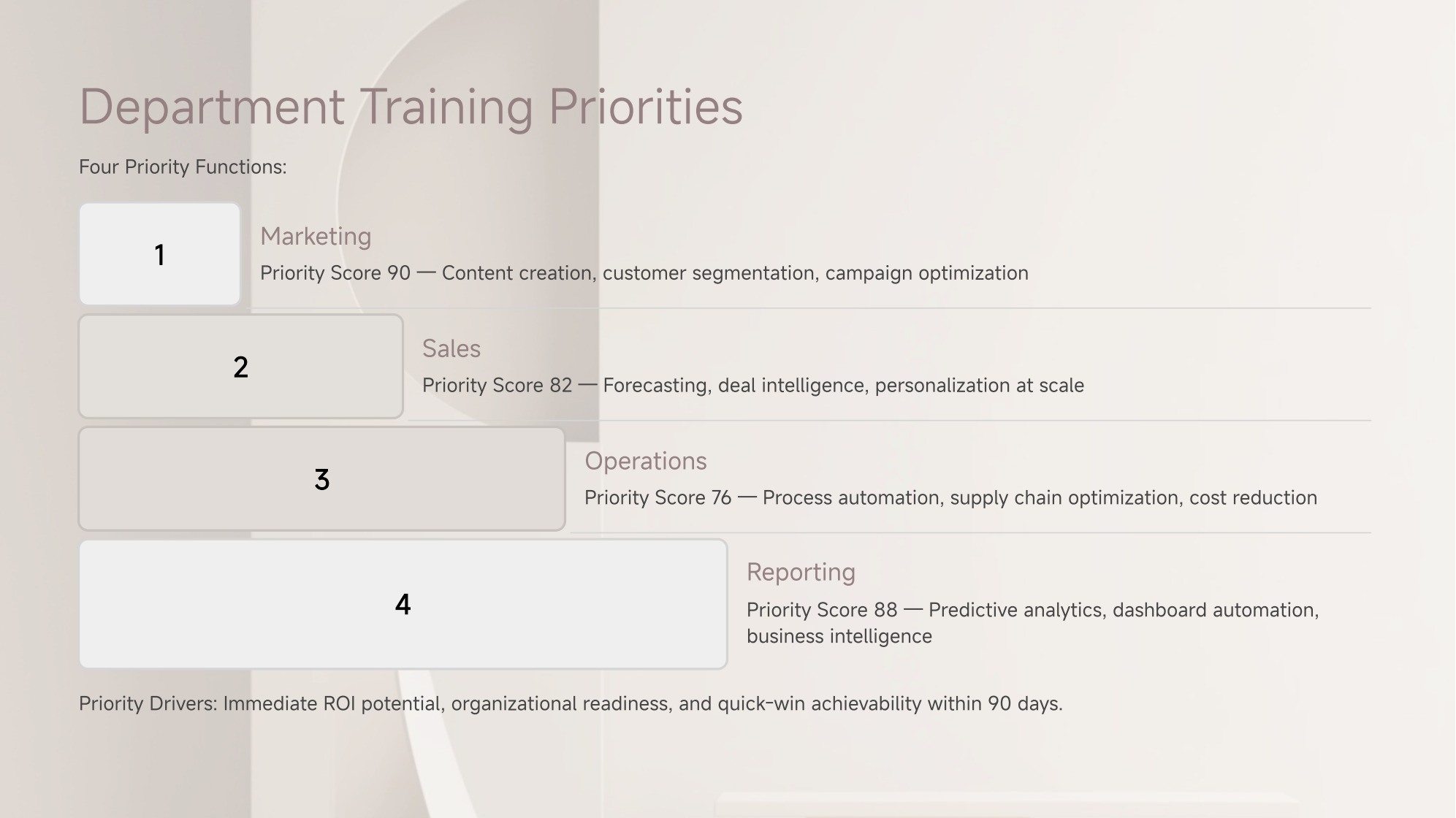
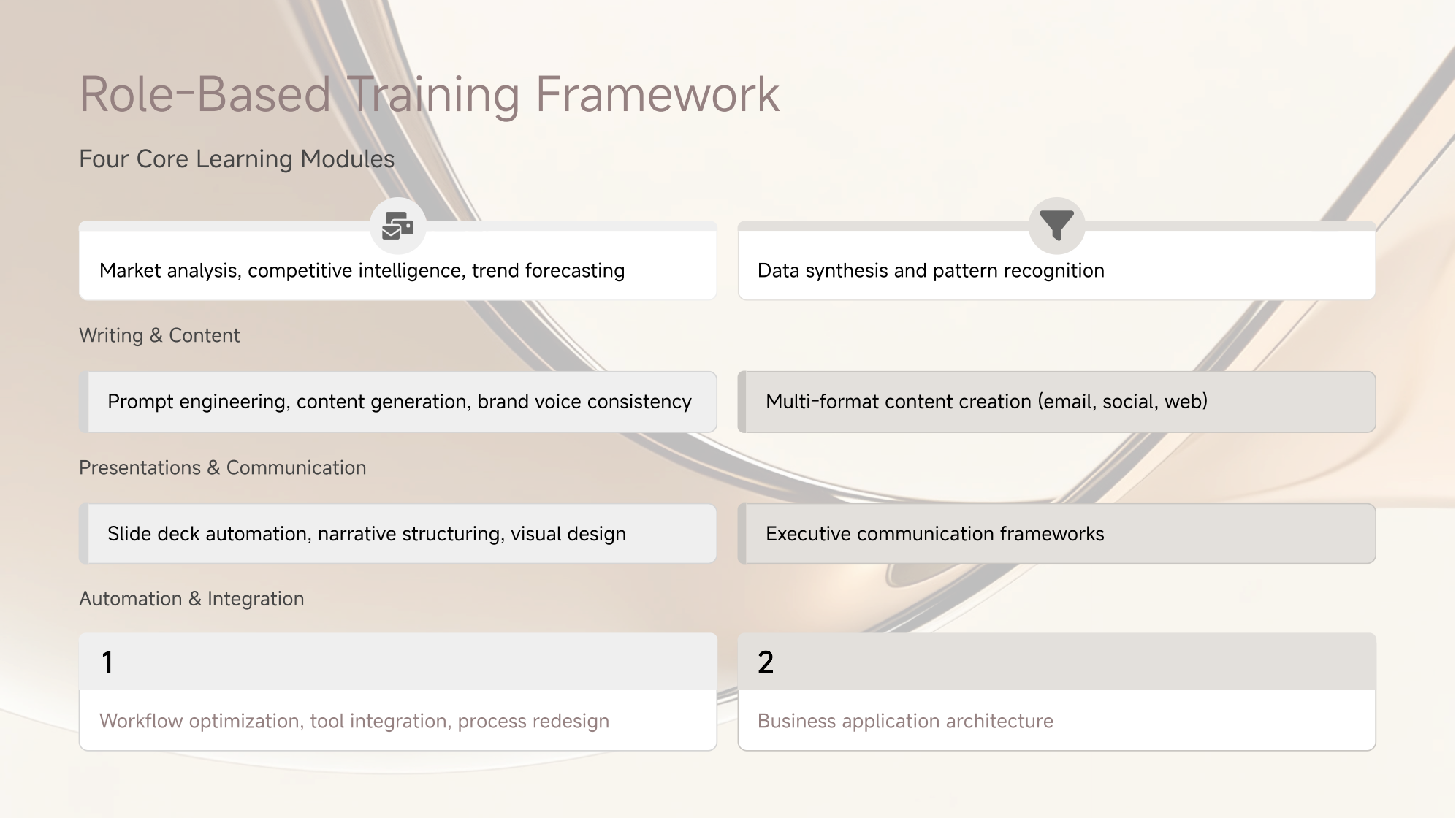
Here is an example of how Pi can turn this kind of rough business idea into a polished business deck structure.

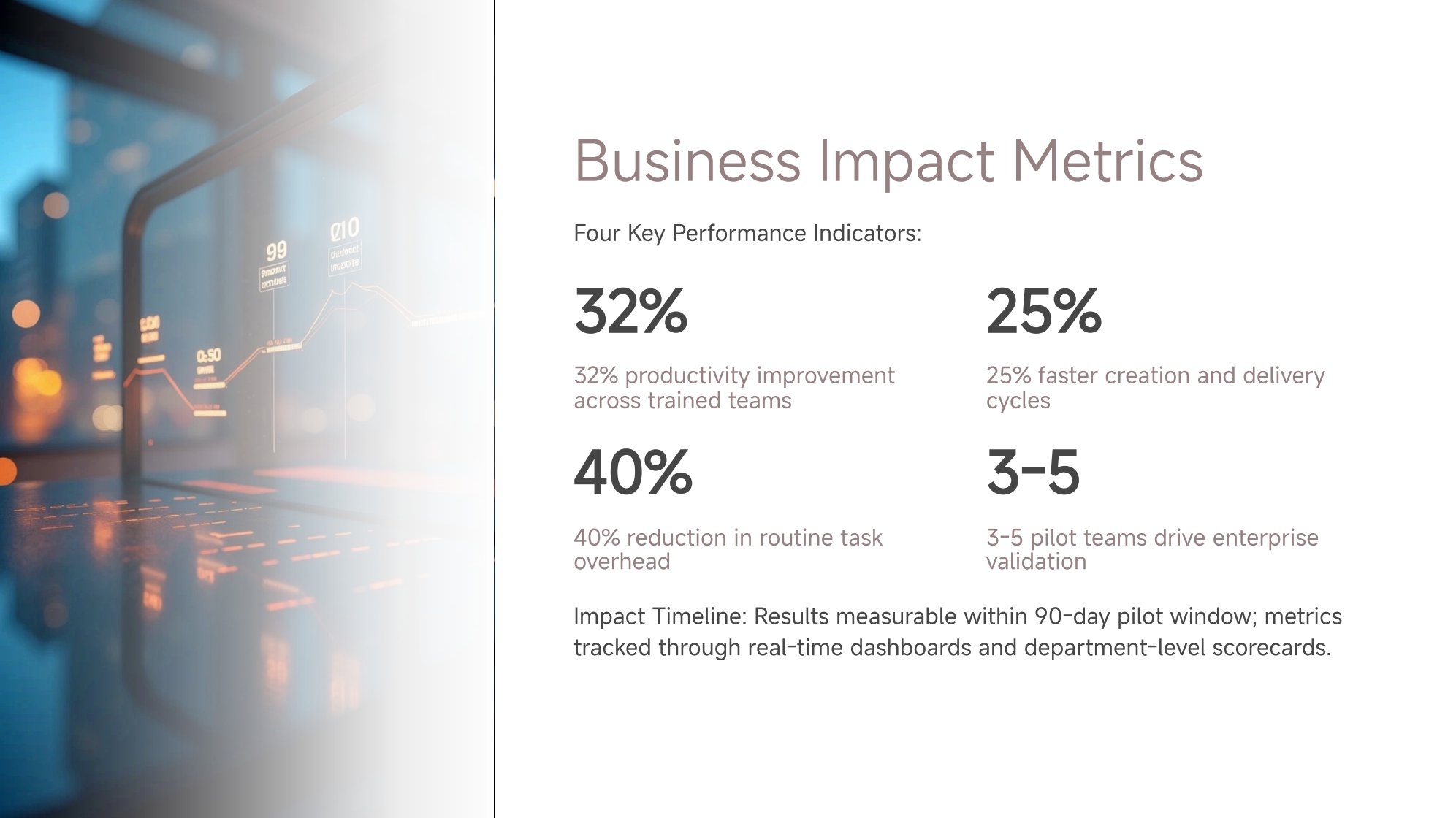
View the full example deck: Enterprise AI Training Service Business Deck
With AI, the idea can become a deck with a clear opportunity statement, problem framing, target audience, proposed solution, business value, go-to-market plan, and next steps. The user can then refine the message, adjust the visual style, add company-specific details, and prepare the deck for a real business conversation.
This workflow is useful because it gives the idea a structure before the team spends too much time on slide design. The first draft becomes a thinking tool, not just a visual output.
From idea to deck: a faster workflow
Turning an idea into a business deck becomes easier when the process is treated as a transformation. The goal is not to generate slides for the sake of having slides. The goal is to turn an unclear idea into a presentation that can be understood, discussed, and improved.
1. Start with the raw idea
The first input does not need to be perfect. It can be a short paragraph, a few bullet points, or a rough description of what the team wants to communicate.
For example, the raw idea might be:
- Launch a new product feature for enterprise customers
- Build a client proposal for a new service package
- Explain a market expansion plan
- Present a campaign idea to the leadership team
- Turn a research insight into a business recommendation
At this stage, the idea may still be incomplete. That is fine. What matters is giving AI enough direction to understand the topic and begin shaping the deck.
2. Add context, audience, and desired outcome
A stronger prompt produces a stronger deck.
Instead of only saying “create a business deck about this idea,” it is better to include the audience, purpose, tone, and desired outcome. These details help AI decide what kind of structure the presentation needs.
For example, the prompt can explain whether the deck is for investors, clients, executives, internal teams, or cross-functional stakeholders. It can also clarify whether the goal is to persuade, inform, request approval, sell a service, or align a team.
This context changes the entire deck. A client-facing deck may need more emphasis on outcomes and credibility. An internal strategy deck may need more focus on trade-offs and next steps. A leadership deck may need sharper recommendations and less background explanation.
3. Refine the generated deck into a polished narrative
AI can create the first version quickly, but the final deck still needs human judgment.
After the deck is generated, the user should review whether the storyline is clear, whether the slide titles communicate real takeaways, whether the recommendation is specific, and whether the evidence supports the argument. Any generic claims should be replaced with more concrete business details.
This is also the moment to polish the tone and design. A business deck should feel concise, structured, and easy to scan. Long paragraphs can be shortened. Weak slide titles can be rewritten. Visual hierarchy can be improved so that the audience sees the most important information first.
The best result comes from using AI to accelerate the structure, then using human judgment to sharpen the message.
When this workflow is most useful
This idea-to-deck workflow is useful whenever a team has the beginning of a business idea but not yet a presentation.
It works especially well for:
- Business proposals
- Product strategy decks
- Client pitch decks
- Market expansion plans
- Internal project proposals
- New service concepts
- Sales enablement decks
- Startup pitch materials
- Campaign strategy presentations
- Leadership recommendation decks
In these situations, the challenge is not only creating slides. The challenge is turning early thinking into a format that can be shared and discussed.
AI helps reduce the blank-page problem. Instead of waiting until the idea is perfectly structured, teams can create a first version, review it, and improve it faster. That makes the deck-building process more collaborative and less mechanical.
Turn your next idea into a business deck with Pi
A strong business deck should make an idea easier to understand, not harder to explain. It should clarify the audience, organize the storyline, support the recommendation, and help the next conversation move forward.
Pi helps turn rough ideas, proposal concepts, strategy directions, and business inputs into polished presentation structures faster. Whether you are preparing a client pitch, internal proposal, product strategy, or leadership recommendation, you can move from early thinking to a structured deck in minutes.
If you already have a rough business idea, a few notes, or a direction you want to present, you can use Pi to turn it into a polished business deck and refine it for your audience.